
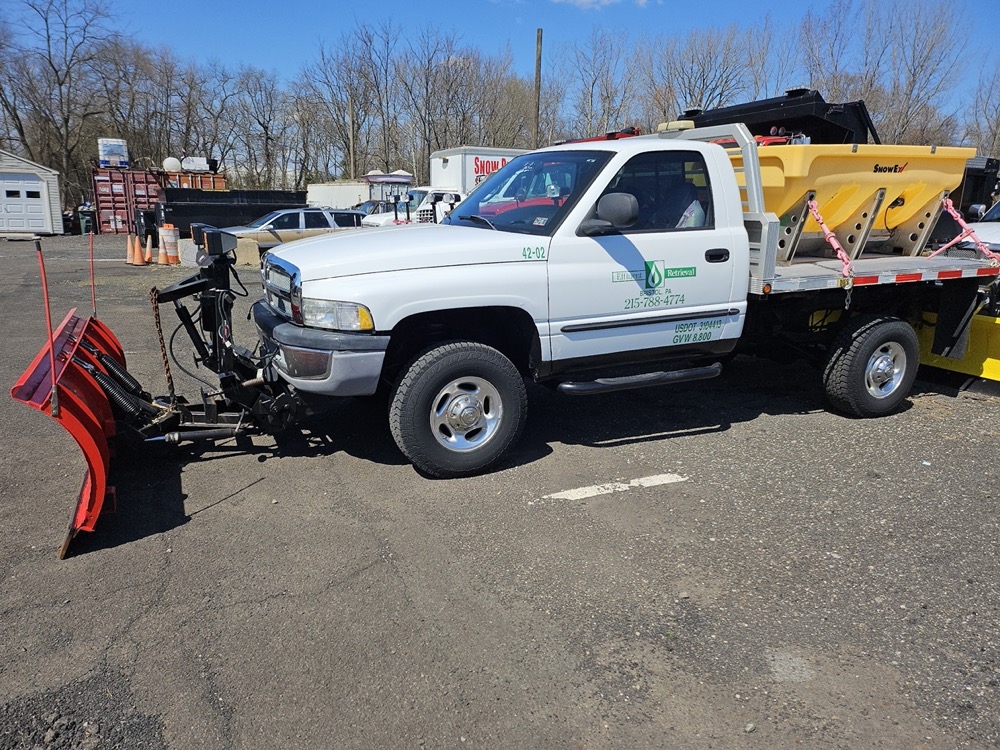
Winter in Pennsylvania, New Jersey, and New York has a way of showing up uninvited. One day your parking lot is clear, and customers are strolling in; the next morning there’s six inches of heavy, wet snow blocking every entrance, a sheet of ice forming on the walkway, and your phone is ringing with employees asking whether they should even try to come in.
For commercial property owners and facility managers across the Mid-Atlantic, snow isn’t just a weather event — it’s an operational and financial risk. Lost revenue, slip-and-fall liability, frustrated customers, and damaged property all follow in the wake of a storm that wasn’t planned for. The good news? None of it has to be a surprise. Professional snow plowing services turn winter from a crisis into a routine, manageable part of doing business.
At Effluent Retrieval, we’ve spent years helping businesses throughout Pennsylvania, New Jersey, and New York stay open, accessible, and safe no matter what the forecast brings. Here’s what smart winter planning actually looks like — and why it matters more than most business owners realize.
Why Winter Hits Mid-Atlantic Businesses So Hard
The tri-state region is uniquely challenging when it comes to snow and ice management, and that’s largely because the weather refuses to behave consistently.
Pennsylvania spans multiple climate zones. Southeastern counties may see around 20 inches of seasonal snowfall, while mountainous and northwestern areas regularly exceed 100 inches thanks to lake-effect systems rolling in off Lake Erie. PennDOT’s winter operations guidance consistently emphasizes advance preparation and route planning — advice that applies just as much to a shopping center parking lot as it does to a state highway.
New Jersey deals with nor’easters that dump heavy, water-laden snow that’s brutal on equipment and dangerous underfoot. Coastal properties face the added complication of flooding mixed with winter precipitation, while urban heat island effects create uneven accumulation that can leave one section of a lot clear and another buried. On top of that, the state maintains specific stormwater management expectations for where snow can and can’t be disposed of.
New York brings its own demands: significant lake-effect snow across western and central regions, commercial districts that need 24/7 accessibility, and state workplace safety guidance that calls for prompt clearing of snow and ice from egress routes. Environmental regulations around snow disposal near waterways add another layer businesses can’t afford to ignore.
Then there’s the region-wide villain: the freeze-thaw cycle. Snow melts during a sunny afternoon, refreezes overnight, and by 7 a.m. your freshly plowed lot is a skating rink. This is exactly why effective snow plowing is never just about pushing snow — it’s about anticipating what happens next.
The Real Cost of Inadequate Snow Management
It’s tempting to treat snow removal as a line item to minimize. But the costs of getting it wrong tend to show up in places that don’t appear on a maintenance invoice.
Lost Revenue and Operational Disruption
If customers can’t park, they don’t shop. If employees can’t safely reach the building, productivity drops. If delivery trucks can’t access your loading dock, your supply chain stalls. A single storm during a peak retail weekend or a critical service period can cost far more than an entire season of professional snow plowing.
Liability That Lingers
Slip-and-fall claims are among the most common premises liability issues businesses face, and winter is prime season. Beyond the immediate injury and legal exposure, incidents drive up insurance premiums, generate workers’ compensation claims, and create documentation headaches. Courts and insurers want to see evidence of reasonable care — which means having a professional provider with service records, timestamps, and a documented response plan is itself a form of protection.
Property Damage You Pay For Later
Improper snow handling causes real infrastructure problems: ice dams that lead to roof leaks, snow piled against landscaping and signage, blocked drains that cause spring flooding, and pavement deterioration accelerated by repeated freeze-thaw cycles. Pile snow in the wrong spot and you’ll be paying for asphalt repairs in April.
Reputation Damage
In an era where a single review mentioning “the parking lot was a mess and I almost fell” can live online forever, accessibility is part of your brand. Meanwhile, if the business next door is plowed, salted, and welcoming while yours isn’t, customers notice — and they remember.
What Professional Snow Plowing Should Actually Include
Not all snow services are created equal. Here’s what a comprehensive program looks like — and what Effluent Retrieval delivers to commercial clients across all three states.
Pre-Season Planning That Happens Before the First Flake
Good winters are won in the fall. That means a full property walkthrough to identify priority zones, evaluate drainage patterns, and determine where snow can be safely stored on-site. We establish trigger depths based on your specific operations, set clear response time commitments, stage equipment and materials in advance, and lock in communication protocols so you always know who to call and when to expect us.
Parking Lots and Pedestrian Areas Handled Strategically
Effective lot clearing uses systematic plowing patterns that maximize usable space and stack snow where it won’t swallow a dozen parking spots or block sightlines. Post-storm cleanup matters too — removing windrows, refining edges, and keeping striping visible.
For pedestrian areas, we prioritize entrances, exits, and emergency egress routes first, clear sidewalks to ADA-compliant widths, treat ramps and stairways, and make sure fire hydrants, loading docks, and service entrances stay accessible.
Ice Control Done Right
Plowing alone doesn’t prevent ice. Pre-treatment before a storm reduces ice bonding to pavement and makes clearing faster and more thorough. Deicing material selection should match actual temperature and conditions — not a one-size-fits-all approach. And post-storm treatments address refreezing before it becomes a hazard. Just as important: applying materials at responsible rates that protect surrounding soil, landscaping, and water resources.
Snow Relocation and Hauling
Sometimes there’s simply nowhere left to put it. When on-site storage runs out, off-site hauling keeps your property functional. This is where regional knowledge matters — New Jersey’s stormwater guidance directs snow to upland, pervious disposal areas away from waterways and wells, and New York’s environmental recommendations similarly discourage stream dumping. Effluent Retrieval handles snow relocation in compliance with state and local requirements, protecting both your property and your standing with regulators.
Why Businesses Choose Effluent Retrieval
Regional expertise. We work across Pennsylvania, New Jersey, and New York, which means we understand the regulatory differences, the regional storm patterns, municipal snow emergency routes, and the local disposal options available in each market.
Integrated service. Snow plowing isn’t a standalone transaction for us — it’s part of a year-round property care relationship. Knowing your site in July makes us better at serving it in January.
Proactive communication. We track incoming storms, notify clients ahead of deployment, document services performed, and review performance at season’s end so next winter goes even smoother.
Environmental responsibility. Judicious deicing application, proper snow placement, and adherence to NJDEP, PennDOT, and New York State guidance protect water quality and keep your business compliant.
Scalability. Whether you manage a single retail location or a multi-property portfolio, our crews and equipment scale to match.
Building Your Winter Preparedness Plan
Ready to get ahead of the season? Start here:
- Assess the property. Identify high-priority zones, drainage trouble spots, and realistic on-site snow storage capacity.
- Define your service level agreement. Response times, trigger depths, priority sequences, and reporting expectations should all be in writing.
- Plan emergency access. Fire department connections, emergency exits, and utility access points need dedicated, maintained pathways.
- Set a realistic budget. Compare seasonal contracts against per-event pricing and plan contingency funds for severe-weather seasons.
- Train your team. Make sure staff know winter safety procedures, who to report hazards to, and how internal communication works during a storm.
Don’t Let Winter Decide Your Season
Snow is coming — that part isn’t optional. What is optional is whether it disrupts your operations, drains your revenue, and exposes you to liability.
Professional snow plowing is an investment that pays for itself in sustained operations, protected revenue, fewer incidents, and a reputation for being the business that’s always open and always safe. Effluent Retrieval combines advance planning, responsive service, environmental stewardship, and clear communication to keep commercial properties across Pennsylvania, New Jersey, and New York running smoothly all winter long.
The question isn’t whether professional snow plowing services are worth it. It’s whether your business can afford to find out what happens without them.
Contact Effluent Retrieval today to schedule your pre-season property walkthrough and build a winter plan that works.
Reference Articles with Links
-
New Jersey Department of Environmental Protection — Snow Removal Policy and Stormwater Management Guidance: https://dep.nj.gov/wp-content/uploads/njpdes-stormwater/snow_removal_policy.pdf
-
Pennsylvania Department of Transportation — Winter Operations and Maintenance: https://www.pa.gov/agencies/penndot/traveling-in-pa/winter/winter-operations
-
PennDOT Publication 370G — Municipal Winter Maintenance: https://www.pa.gov/content/dam/copapwp-pagov/en/penndot/documents/public/pubsforms/publications/pub%20370g.pdf
-
PennDOT Publication 370M — Winter Maintenance Operations Guide: https://www.pa.gov/content/dam/copapwp-pagov/en/penndot/documents/public/pubsforms/publications/pub%20370m.pdf
-
New York Office for People With Developmental Disabilities — Snow and Ice Removal Winter Safety Alert: https://opwdd.ny.gov/system/files/documents/2026/02/hs-alert-snow-and-ice-removal-winter-2026_acc.pdf
-
New York State Governor’s Office — Winter Weather Updates and Safety Information: https://www.governor.ny.gov/news/governor-hochul-updates-new-yorkers-extreme-cold-and-winter-weather-impacting-state-starting
-
New York State Department of Public Service — Winter Weather Preparedness Documents: https://documents.dps.ny.gov/public/Common/ViewDoc.aspx?DocRefId=%7B80FFB297-0000-C813-8CB0-CD51FCFD4B6F%7D